Showing posts with label Alpaca. Show all posts

Sunday, December 28, 2014

Southeastern Animal Fiber Festival

saffsite.org
I recently attended the Southeastern Animal Fiber Festival (SAFF) in Fletcher, NC, near Asheville (I'm always looking for a reason to head to the mountains). It was a great event and I learned a lot while I was there. I attended two workshops at the festival that were very helpful. One was a Parasite Management class that certified me to use the FAMACHA method of parasite control. The other was a pasture management class. I also walked around the displays and was amazed at all the different vendors and their products; everything from
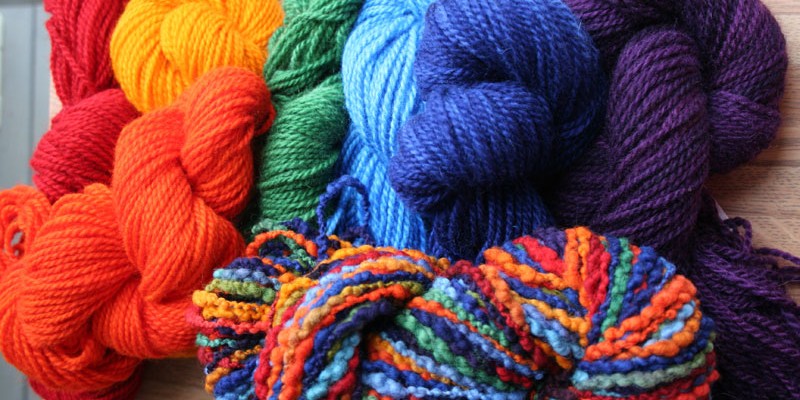
Alpaca to Yak fiber and every sort of device ever conceived of to process it.

FAMACHA Parasite Control Class - This was absolutely the most useful class I have been to in a while. The premise of FAMACHA is understanding that parasites exist and we will never get rid of them. Instead, we manage them and work to prevent their resistance to various wormers by not over-treating the herd. Instead, we should evaluate each animal and treat the ones that need it. FAMACHA provides a method of evaluating the animals to see which ones need treatment. This method reduces the parasite drug resistance in the herd.

The basis of the FAMACHA method of parasite control is this; Intestinal worms have a short life-cycle. When we treat an animal with de-wormers, we develop drug resistant worms. These resistant worms of the treated animals will, over time, mix with the non-resistant worms of the non-treated animals and the drug resistance will be bred out of them.

I definitely recommend becoming FAMACHA certified. You need to attend a class to get the certification and the evaluating chart. The key to success in using this method is keeping good records and conducting regular assessments of the herd.

In addition to FAMACHA, the instructor gave the class a great run-down on the various classes of wormers available and how to use them. Here are a few key notes that I took away from the class:

1. Learn to do fecals. There are two types. Qualitative (presence of worms) and Quantitaive (how many worms).

2. Rotate your pastures if possible. Juvenile parasites stay on the bottom 1-2 inches of grass so if you are able to keep your grass long, the animals will graze on the tips of the grass and leave the parasites at the bottom.

3. Use the same wormers until you find that they are no longer effective for your herd.

4. There are really only three classes of wormer. There are a number of sub-classes of those three. There is little difference among the wormers in those subclasses so if one is ineffective, the others within that class will be as well.

5. Parasites will thrive in a warm, moist environment so keep that in mind when considering your worming program. Eliminate wet areas in your pasture areas (leaky tanks, etc.)

6. Don't let your animals have free access throughout the pasture. Find a way to divide your pastures up into rotational grazing areas and move them frequently through those areas.

7. If you have horses or donkeys they can follow behind in the grazing pattern and vacuum up the parasites the the alpacas/goats left behind. Ruminant parasites will not live in the equine body.

The pasture management class was basically a FAMACHA-lite class with some pasture management tips added in for good measure. I probably could have skipped this class and saved a little money, but I did learn a thing or two.

If you ever have a chance to visit the Southeastern Animal Fiber Festival, I recommend that you take the opportunity. It's cheap to get in and you will be amazed at what you'll see. Next years SAFF is Oct 30 - Nov 1. 

Friday, June 20, 2014

Why Alpacas?

The Golden Girls the day we got them.
I am often asked the question, "Why Alpacas?" It's not a very easy question to answer because the simple truth of the matter is it just kind of happened. It all started a long, long time ago in a state, very far away.

Many years ago I walked into the Post Exchange (PX) at Fort Leavenworth, KS where a local alpaca farm had set up a display in the atrium of the store. They had spinning demonstrations, pictures and alpaca products for sale arrayed all around the display. I was captivated. At that point I had heard about this alpaca animal but didn't know much about it. Melanie and I spent quite a while there looking at the displays and asking questions.  After that day I started researching alpacas and frequently told Melanie that I wanted an alpaca farm when I grew up and retired from the Army. We kind of treated it as a joke but deep down, I was serious.

Fast-forward several years...

I began my transition from the Army in the winter of 2013 and my Army retirement ceremony was in February. One day shortly after the ceremony, Melanie made me get in the car and took me to Irmo, SC where we met a man who was selling four pet alpacas because he no longer had time to care for them. They were named after the Golden Girls; Sophia, Dorothy, Blanch and Rose. As my retirement gift, Melanie bought them for me. A week later we came back with the trailer to pick them up. Sadly, Sophia had an accident where she cut her eye severely on chicken wire and died before we could bring her home, but the other three became permanent residents of Red Clay Farm.

A few weeks later, I traveled to Emmitt Acres Farm in Bennettsville, SC to meet with an alpaca farmer friend I know. He was going to give me some pointers on raising alpacas. While I was there, he introduced me to 11 alpacas he was keeping on his farm. Their previous owner was a local farmer who had lost her battle with cancer and the alpacas were part of an estate sale. My friend told me I could buy the herd of 8 registered females, 1 registered male and 2 unregistered males for a song. So I did. A week later they arrived at our farm and joined the golden girls.

I suddenly found myself with an instant alpaca farm on my hands and I needed to figure out how to be an alpaca farmer. I'm still figuring it all out but we're making progress. That will be the topic of another post later on.
Some of the girls after shearing this year.
So, why alpacas? Here is my list of reasons:

1. I like them. They are interesting animals. They are curious, a little standoffish and cute.

2. They are a potentially profitable livestock and offer an opportunity to provide a product that does not require slaughter (although, that is an option. Alpaca is the other red meat in South America). Alpaca fiber is among the softest fiber there is. Additionally, alpacas can sell for a few hundred dollars to several thousand dollars depending on the market and the quality of the animal.

3. They are fairly low maintenance animals.

4. Alpacas have padded feet and are easy on the pasture (although if given a chance, will eat the grass to a nub).

5. Alpacas use communal dung piles which makes clean up fairly easy. We collect and compost the manure to improve our soil around the farm.

So, there you have it... the exciting story of an accidental alpaca farmer and why I do it. Stay tuned to this station for more news and information about alpacas, goats, worms and other miscellany.

Saturday, October 12, 2013

Preserving an Alpaca Hide

Here is Sangria
We're not sure why, but Sangria the alpaca had not been well for about two weeks and we have been trying to nurse her back to health. After two trips to the vet, daily medications and lots of effort it became apparent that she was not going to make it. On Friday afternoon she died quietly in the shelter with her alpaca friends sitting watch.

Not being one to miss an opportunity, we turned her death into a learning opportunity. For those who are a little squeamish, stop reading here.

One of the main reasons for raising alpacas is for their fiber. Since Sangria was no longer going to need her's anymore, we decided to learn about tanning hides.

When I found Sangria dead on Friday afternoon, I picked her up and moved her to the back of the property. I had already prepared her grave there the day before because it was pretty apparent that she was not going to survive. I approached the task with some trepidation. While I looked forward to the opportunity to learn a new skill, I was not looking forward to the task of skinning the alpaca. It turns out it was not as bad as I thought it would be.

The skinned hide
Once we had her in position, my son and I worked together to skin her. It was relatively easy once we got it started. We started on her chest and worked our way around her body. The hardest part of the job was working around her legs. We skinned down to her elbows an around the leg. Once we got past that part it was easy and the skin just pulled away.

Scraping the hide. I really had to get into the
work to hold the hide in place while scraping.
After skinning her, we placed her in her grave, sprinkled a little lime on top and buried her. The next task was to scrape the hide and remove any fat and muscle that was still attached to the skin. This was the hard part. It doesn't come off as easy as you might think. At first I tried to scrape the hide with a knife, but I found that to not be very effective. Then I moved to the machete and worked on the curved surface of the log. That worked much better because I could apply firm pressure against a 1-2" section of the hide at a time. I worked from the center of the hide to the outside edges, making sure I removed all fat and muscle.

Once the hide was scraped, we had to salt the skin side to help remove the water from the skin. We laid the hide out, skin side up, on chicken wire stretched between two saw horses and poured about 5 pounds of salt on the it. Since then we have had to change the salt out several times because it soaks up the water and stays wet. I figure that can't be good for the uncured hide.

Salting the hide with about 5 pounds of
non-iodized salt.

I'm not sure if this little experiment will work, but we'll soon find out. I halfway considered doing the tanning myself as well, but didn't want to mess with the chemicals and the proper disposal of those chemicals. I think I'll leave that to the pros. In the meantime, we will continue salt-curing hide. Here are some of the links I used to educate myself before attempting this project:

This Mother Earth article talks about how to tan the hide:  http://www.motherearthnews.com/homesteading-and-livestock/how-to-tan-a-hide.aspx#axzz2hhLGreFl

http://www.dutchhollowacres.com/2010/03/28/alpaca-death-preserve-alpaca-hide-fur/

Also, YouTube has a wealth of information on how to prepare a hide for tanning. There were several videos that were particularly helpful, but I can't find them now. 

Thursday, May 9, 2013

Red Clay Alpacas

I am probably crazy but we are now an alpaca farm.

Over the past month I made a deal to purchase a small herd of alpacas. We added 8 registered females and three males (one registered) to the three (unregistered females) we already had. The person who owned them prior to us lost her battle with cancer and her farm was liquidated. These animals needed a new home.

So, what does one do with 14 alpacas? Well... stay tuned and find out. As soon as I figure it out, I'll let you know.

Sunday, March 10, 2013

Pre-Composting Worm Food


I love my experiments!

We've been throwing old produce into the compost bin and layering it with alpaca manure for the past week. The intent is to pre-compost it just enough and feed it to the worms. As you can see by the thermometer (even if it is kind of hard to see), we've started to see an increase in the temperature. It hit 120° today. I expect that it will reach 130° - 140° sometime this week and then start to drop off. When the temps start to drop, I'll mix it up and let it cook again. In about two more weeks, it will be perfect worm food - soft, mushy, rotting and loaded with bacteria and fungus. Yum, Yum!

Isn't science cool?

Monday, March 4, 2013

Alpacas Join the Team

I've always said that I would like to raise alpacas. They are great animals. They are clean, pretty easy keepers, easy on the land and just so darn cute!

Well, this week, Mrs Red Clay Farmer purchased three learner alpacas for me as a Army retirement gift. These girls have been pets for the past year or so and the previous owner decided he was too busy to keep them. They are named after the characters from the Golden Girls. Dorothy is the white one, Rose is Brown and Blanche is the black one. They came with two donkeys as well - Scarlet, the mom and her son, Harpo.

The girls and Harpo have made the transition to the farm and seem to be well adjusted. Scarlet, on the other hand, has not made it to our place yet. She has proven to be a challenge to catch and seems to be very happy at her old home. We are going to make one more attempt to bring her home later in the week.